All Aboard the Tow Truck
A bus that will no longer move under its own power may appear ready for a heavy-duty tow, but its wheels, steering, suspension, and drivetrain can tell a different story. A mechanical failure may leave the bus sitting normally, while collision damage can leave one corner unable to roll or steer. With I-20 bus towing, determining how the bus can move is just as important as determining how much it weighs.
Sometimes the towing connection comes later, after the bus itself has been prepared to travel.
Start With the Wheels and Steering
A large passenger vehicle depends on several systems simply to roll behind a tow truck. If the steering remains functional and the wheels are positioned normally, the situation is different from one involving a damaged axle, suspension component, or tire.
A bus with collision damage may have a wheel turned at an unusual angle or bodywork interfering with a tire. Mechanical problems can also affect whether certain wheels should remain on the roadway during transportation.
The first question is not merely, “Can we lift it?” It is also, “What will happen when it starts rolling?”
The Drivetrain Changes the Preparation
School buses, motorcoaches, transit buses, and shuttles do not all share one mechanical layout. Their drivetrains and axle arrangements can vary, which affects the preparation needed before towing.
Crews need to understand which wheels will remain on the pavement and how the bus is configured before movement begins. That assessment helps prevent assumptions based simply on the size or appearance of the vehicle.
A bus may look much like another one from the curb while requiring a different approach underneath.
Length Becomes Important Once the Bus Is Lifted
Raising one end changes the angle of the entire bus. On a long vehicle, the effects can extend well beyond the towing connection.
That means several characteristics deserve attention:
- Overall length and wheelbase
- Front and rear overhang
- Ground and underbody clearance
- Axle configuration
- Steering and suspension condition
- Drivetrain layout
- Wheel and tire damage
During bus towing along I-20, those details help determine whether the vehicle can travel in the position required for the tow.
A Wheel Problem Can Become a Recovery Problem
A bus that cannot roll normally may need additional work before transportation begins. A damaged wheel, axle, or suspension component can prevent the vehicle from simply following behind a heavy-duty tow truck.
With heavy bus towing near I-20, recovery may therefore include getting the bus into a position where it can be connected and moved without relying on a damaged component to behave normally.
This distinction matters after collisions in particular. The bus may need recovery first and transportation second.
Clearance Can Change After Hookup
Once the towing end is raised, the bus no longer sits at its normal ride angle. The rear overhang or equipment underneath the body may move closer to the pavement.
During commercial bus towing on I-20, that altered geometry remains relevant as the bus encounters turns and changes in pavement elevation. Hooking up successfully does not eliminate the need to watch how the rest of the vehicle travels.
Passengers and the Bus Become Separate Problems
If passengers were aboard when the bus became disabled, their needs have to be handled independently of the damaged equipment. The appropriate parties may arrange another bus or another means of transportation.
Once the passenger issue is addressed, bus recovery around I-20 can concentrate on the vehicle itself. An empty bus still has the same wheelbase, drivetrain, damaged components, and clearance limitations it had before everyone stepped off.
That separation is easy to overlook, but towing the bus and transporting its passengers are two different tasks.
The Condition of the Bus Determines the Next Move
An engine problem, damaged steering, a suspension failure, and collision damage can all immobilize a bus in different ways. There is no single preparation sequence that fits every situation.
For heavy vehicle towing near I-20, the useful information comes from the actual bus: what still rolls, what still steers, which components are damaged, and how its dimensions will affect transportation.
Those answers shape the job long before the bus reaches its destination.
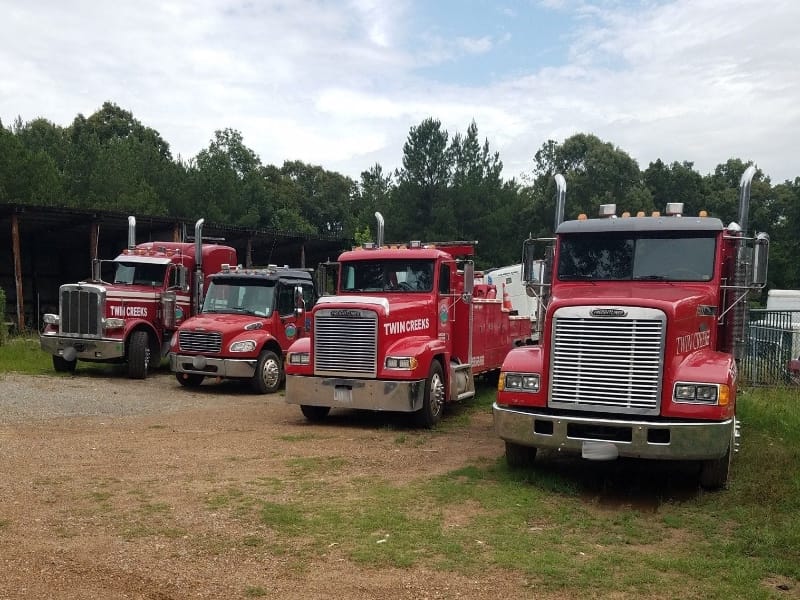
Twin Creeks Towing: I-20 Bus Towing Our Customers Can Count On
Twin Creeks Towing serves east-central Alabama. When a bus becomes disabled, moving it can involve considerably more than matching a tow truck to the weight of the vehicle.
For heavy bus recovery along I-20, wheel condition, steering, drivetrain, clearance, and overall dimensions can each change how the job proceeds. I-20 bus towing begins with understanding what the bus can and cannot do in its current condition, then preparing it accordingly for the trip.
FAQs
Can a bus be towed if one of its wheels is damaged?
Potentially, but the damaged wheel can change how the vehicle needs to be recovered and prepared. Crews first need to determine whether that wheel can safely be involved in movement.
Why does steering condition matter during a bus tow?
The bus still needs to track properly as it moves. Collision or mechanical damage affecting the steering can require additional recovery work before transportation begins.
Are school buses and motorcoaches prepared for towing the same way?
Not necessarily. Their drivetrains, dimensions, axle configurations, and body layouts can differ considerably.
Why does lifting the front of a bus affect the rear?
A bus has a long body, so changing its angle at one end changes clearance elsewhere. The rear overhang may sit closer to the pavement once the front is raised.
What happens to passengers when their bus breaks down?
Passenger transportation is handled separately from the disabled vehicle. Another bus or other transportation may be arranged by the appropriate parties.
Does every disabled bus need recovery work before towing?
No. Some buses remain in a condition where towing preparation can begin directly. Collision damage, wheel problems, or an off-road position can make recovery necessary first.