
Why Load Can Be the First Variable in a Rollover
Northeast Alabama carries a wide mix of commercial freight. When a semi rolls on a highway in this region, load condition is nearly always part of the picture. US-78 semi towing responses to rollover incidents share a consistent finding. How the cargo was secured and how high it sat affected how the truck handled the turn. Getting that right before departure removes a variable the driver cannot manage once the curve begins.
Cargo that shifts or sits too high changes how a semi responds to curves and ramps. Even moderate lateral force becomes harder to manage when the load is unbalanced or stacked too high. Drivers who treat load inspection as a checklist item carry a risk into every turn.
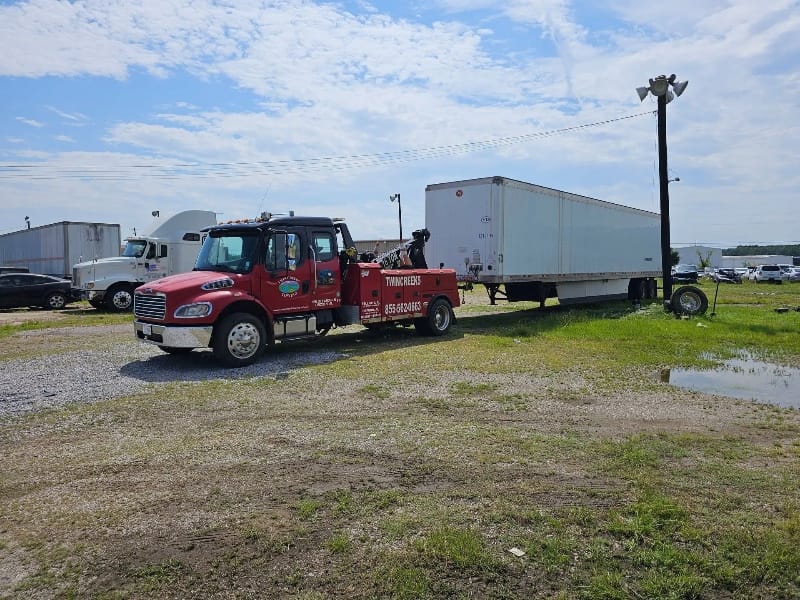
How Shifting Cargo Sets a Truck Up for a Rollover Through a Turn
A curve creates lateral force. On a properly loaded and secured truck, that force transfers evenly across the axles. When cargo has shifted or was never balanced, the uneven weight moves to the outside of the turn faster. The outside tires absorb that load until they cannot. Experienced operators assess cargo balance before departure because fixing it after a rollover costs far more than checking it before.
What I-20 and US-78 Demand From a Driver at Speed
A vehicle of any size needs more time and space to manage curves as its weight and height increase. On a loaded semi at highway speed, ramp curves and sharp entries require decisions made well before they arrive. The I-20 corridor and US-78 include ramp geometry that catches drivers off guard. Some ramp configurations post advisory speeds well below the highway limit.
Speed management before a curve is the control point. A driver who slows to the appropriate speed before entry has options inside the turn. A driver who enters too fast has none. US-78 semi towing recoveries from rollover scenes confirm this. Every rollover call points back to a decision made before the curve began.
Checklist: Before Running a Heavy Load on This Corridor
Here is what careful drivers check before every US-78 semi towing run on I-20:
- Inspect cargo balance and load height before departure, not after a shift
- Check that all load securement points are properly tensioned and accounted for
- Note ramp advisory speeds along the planned route and plan for them in advance
- Reduce speed approaching any interchange, ramp, or curve that follows a straight section
- Use extra caution with partial liquid loads, which add surge risk in every turn
- Save contact information for US-78 semi towing support before running the corridor
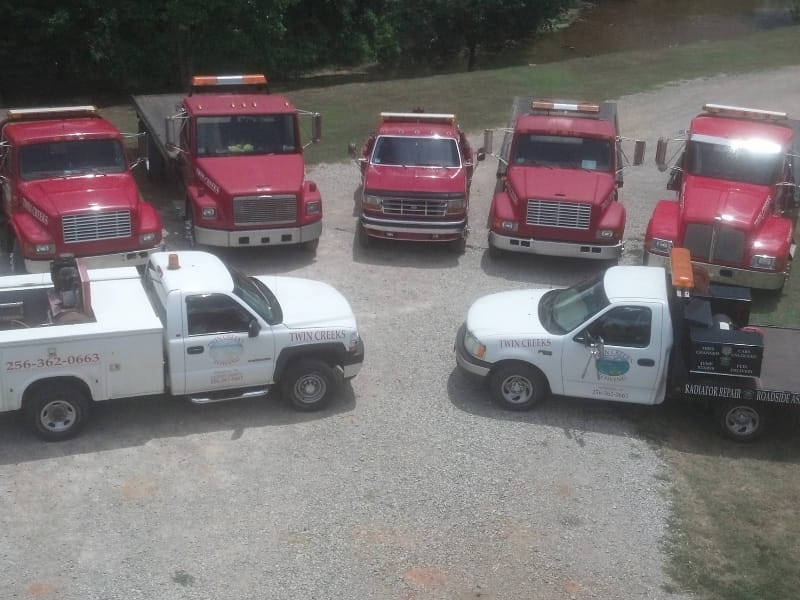
Twin Creeks Towing: US-78 Semi Towing Across Northeast Alabama
Twin Creeks Towing has served northeast Alabama since 2008, covering Pell City, Lincoln, Anniston, and Oxford. The team works across St. Clair, Talladega, and Calhoun counties along the full I-20 corridor. Our fleet handles everything from light passenger vehicles to heavy commercial semis and off-road equipment. US-78 semi towing calls, including rollover recoveries, are part of the regular work our trained operators handle.
Law enforcement and the Alabama State Troopers count on Twin Creeks for highway recovery work. Our operators pass background checks, drug tests, and regular professional training. No upselling, no surprises on price, and clear communication throughout every call. US-78 semi towing in northeast Alabama means Twin Creeks arrives prepared, with matched equipment and a clear approach.
FAQ
How does proper load securing prevent semi truck rollovers?
Cargo that is evenly distributed and tightly secured does not shift during transit. When the truck enters a curve, the load stays in place and the weight transfer to outside wheels follows a predictable pattern the driver can manage. Unsecured or poorly balanced cargo shifts with the truck’s movement, adding lateral momentum the driver has no control over. Proper securing does not eliminate rollover risk but removes one of the most significant variables.
What is load height and why does it matter for rollover risk?
Load height refers to how far above the frame the cargo sits. A low, flat load keeps the truck’s center of gravity close to the ground, which improves stability in turns. A tall or stacked load raises the center of gravity, which means more weight transfers to the outside wheels during a turn. The higher the center of gravity, the faster that transfer happens and the less margin the driver has.
What are advisory speed signs on ramps and why do they apply differently to trucks?
Advisory speed signs indicate the speed at which the ramp’s curve was designed for average vehicles. For a loaded semi with a high center of gravity, that speed is typically too fast to be safe. The truck’s weight and height increase the lateral forces generated during the curve, which means its safe entry speed is often lower than the posted advisory. Experienced drivers treat ramp advisory signs as starting points and reduce further based on their load.
What should a trucker do immediately after a semi rolls over on a highway?
Stay in the cab if it is structurally intact and call 911. Provide your exact location, direction of travel, and any cargo hazard information. Do not attempt to move the truck or extract any rolled cargo on your own. If the truck is blocking a travel lane, note that when calling the dispatcher. Recovery of a rolled semi requires heavy-duty equipment and operators trained for the scenario.
Why do rollover recoveries take longer than standard towing jobs?
A rolled truck cannot be hooked up and moved in its current position. The recovery crew must assess the scene, rig for the lift, stabilize the truck during the righting process, and address any cargo or fluid spill before transport can begin. Each step requires time, the right equipment, and trained operators. If cargo must be offloaded before the truck can be safely righted, the recovery extends further.
Does cargo type affect how a rollover recovery is handled?
Yes, significantly. A truck carrying standard freight requires assessment and rigging. A truck carrying hazardous materials requires HAZMAT evaluation and containment before any equipment approaches the cargo. Bulk liquid loads add spill management to the recovery process. Oversized or irregularly shaped cargo may need to be partially unloaded before the truck can be righted. Cargo type is one of the first details a dispatcher confirms before sending any unit to a rollover scene.