The Myths Debunked
Calling for a tow is already stressful enough without a new worry arriving with the tow truck. Will the towing method damage my transmission? Should I insist on a flatbed? Does it need to go in neutral first? As Riverside towing professionals, we understand these questions, and they come from a real place. Transmission repairs are expensive. Stories about tow-related damage exist, and most drivers have no clear picture of what actually happens to their drivetrain when a tow truck hooks up. Towing done with the right method for the right vehicle does not damage transmissions. Let us explain!
Why the Concern Has a Real Basis
Stories about vehicles coming back from a tow with transmission problems are not invented. Those incidents happen. They trace back to a specific cause: a mismatch between the towing method and the vehicle‘s drivetrain. The concern is justified, though the answer isn’t to avoid calling a tow truck.
The Method Has to Match the Drivetrain
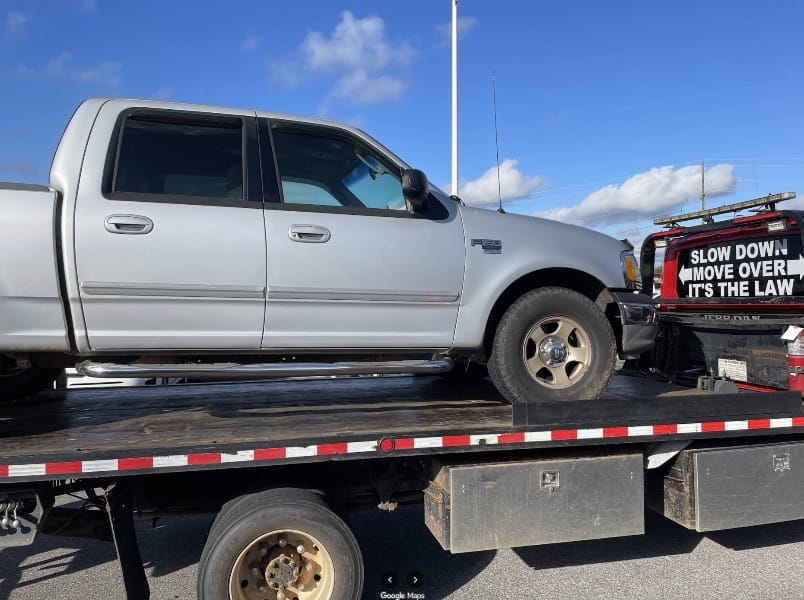
Wheel-lift towing, where two wheels are raised while the other two remain on the road, is safe and widely used. But with one key condition: the wheels being lifted have to be the driven wheels. On a front-wheel-drive vehicle, lifting the front keeps the drive wheels off the road, so the transmission components don’t spin during the tow. Lifting the rear end of that same vehicle puts the front drive wheels on the ground, where they rotate with the engine off and no fluid circulating to lubricate the moving parts. Applying wheel-lift to the wrong end of a front-wheel-drive vehicle is what causes damage, not wheel-lift towing as a category.
AWD Vehicles Are a Different Situation Entirely
All-wheel-drive and four-wheel-drive vehicles can’t be safely towed with only two wheels raised. Because both axles drive the wheels and lifting either end still leaves a live axle on the road. For these vehicles, a flatbed is the required approach. The transmission selector position makes no difference in this scenario, because the issue is driven wheels turning on the road, not which gear the selector is in. Most AWD vehicle manufacturers say this directly in the owner’s manual, but a trained tow operator knows it regardless.
What a Professional Tow Operator Actually Does
Before hooking up, a professional tow operator identifies the drivetrain type, selects the appropriate method, and positions the equipment accordingly. For a front-wheel-drive vehicle, that means lifting the front. For a rear-wheel-drive vehicle, the rear. And for an AWD or 4WD vehicle, it typically means loading onto a flatbed.
This is standard Riverside towing practice for any trained operator, and it is the step that prevents the transmission damage improper towing causes.
When to Ask for a Flatbed
A flatbed is always the safest option because all four wheels leave the ground. These are the situations where a flatbed is the right call regardless of drivetrain type:
- AWD and 4WD vehicles of any kind
- Vehicles with lowered suspensions or limited ground clearance
- Cars with pre-existing transmission or drivetrain issues
- Any situation where the drivetrain type can’t be quickly confirmed at the scene
For standard front-wheel-drive or rear-wheel-drive vehicles in good condition, wheel-lift from the correct end is safe and appropriate. A professional Riverside towing operator should be able to explain which method they’re using and why before the hook goes on.
Twin Creeks Towing Matches Every Riverside Towing Call to the Right Method
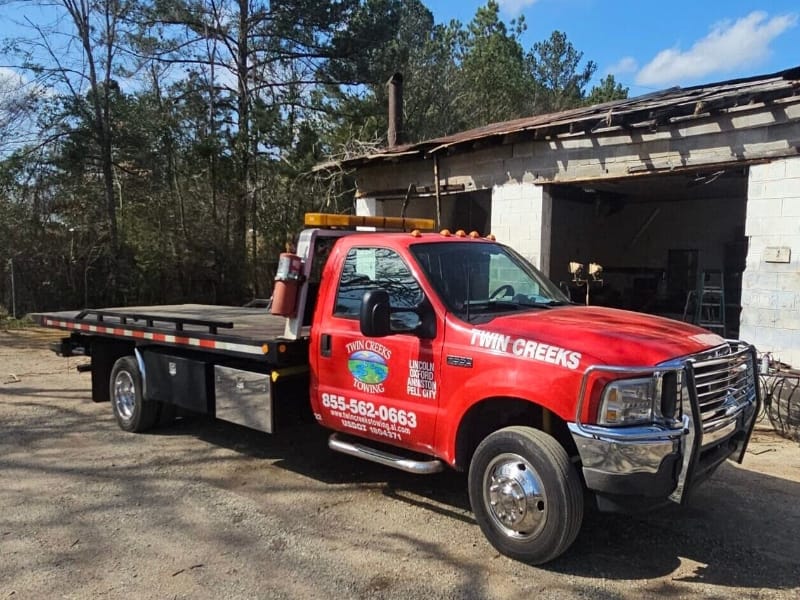
Twin Creeks Towing handles every Riverside towing call by identifying the vehicle before deciding on an approach. We carry both flatbeds and wheel-lift units, and our Riverside towing crew knows which drivetrain requires which equipment. We don’t apply the same setup to every vehicle, because the wrong method on the wrong car creates exactly the kind of problem drivers are worried about when they call us.
When Twin Creeks Towing takes a Riverside towing call, the vehicle is identified before we touch it. Reach out when you need us and we will arrive with the right equipment for what you’re driving.
FAQ
What should I ask a tow company before they hook up my car?
Ask what method they plan to use and why. A qualified operator should be able to tell you whether they’re using a flatbed or wheel-lift, and which end they intend to lift if it’s a wheel-lift. If they can’t explain that quickly, it’s worth asking again before they hook up. For AWD and 4WD vehicles specifically, ask directly if they have a flatbed available.
Can any tow truck safely tow an AWD vehicle?
Only if it has a flatbed. A wheel-lift truck can’t safely tow an AWD vehicle because both axles drive the wheels, and leaving either axle’s tires on the road causes the drivetrain to spin without engine lubrication. A tow company that arrives with only a wheel-lift for an AWD vehicle either needs to call for a flatbed or is about to cause damage.
Does putting the car in neutral protect the transmission during a tow?
In some cases, but not all. On a front-wheel-drive car being correctly lifted from the front, neutral is largely irrelevant because the drive wheels aren’t on the road. On a vehicle being improperly towed with driven wheels on the ground, neutral doesn’t stop those wheels from spinning and doesn’t circulate transmission fluid to the moving parts. The method matters more than the selector position.
How long does a tow have to be before transmission damage occurs?
There’s no universal threshold. Heat and friction build from the first rotation, and how quickly damage accumulates depends on the vehicle, the drivetrain type, and how much the components are spinning. Short distances at low speed carry less risk than long highway tows, but the safest position is that any tow with driven wheels on the ground in an incompatible vehicle is potentially damaging, regardless of distance.
What is the difference between a tow dolly and a flatbed?
A tow dolly lifts the front two wheels of the towed vehicle off the ground while the rear wheels remain on the road. It works for front-wheel-drive vehicles because the driven wheels are the ones lifted. A flatbed lifts all four wheels and is the safer choice for any vehicle where the drivetrain type is uncertain, or for AWD and 4WD vehicles where no wheels should be on the road during transport.
Is it safe to stay in my car while it’s on a flatbed?
No. Passengers are not permitted to ride in a vehicle being towed, including on a flatbed. This is standard practice across towing operations and is required by most state regulations. In an emergency, the tow operator will transport you in the cab of the tow truck.